Dear Mira For those who stop to look

A monthly letter for children aged 7 to 11

A letter from Mira, every month.

Mira is thirteen. It is 1882, and she notices everything. Each month she writes from somewhere in the British Isles, with news from her uncle Edmund, a naturalist at sea.

First Monday of the month · Posted by hand · UK postage included · Cancel any time

One story, one letter a month. Every subscriber reads the same chapter, in the same week.

Next monthly letter posts on the first Monday of the monthSubscribe by the Sunday eight days before to be in it

What’s in the envelope

Four things, posted by hand in a dark blue envelope with your child’s name on the front.

Mira’s letter

A chapter of an ongoing story, written to your child as a friend. Each month she writes from somewhere new.

Edmund’s letter

News from her uncle, a naturalist aboard a navy ship in the East Indies. His letters take months to reach her.

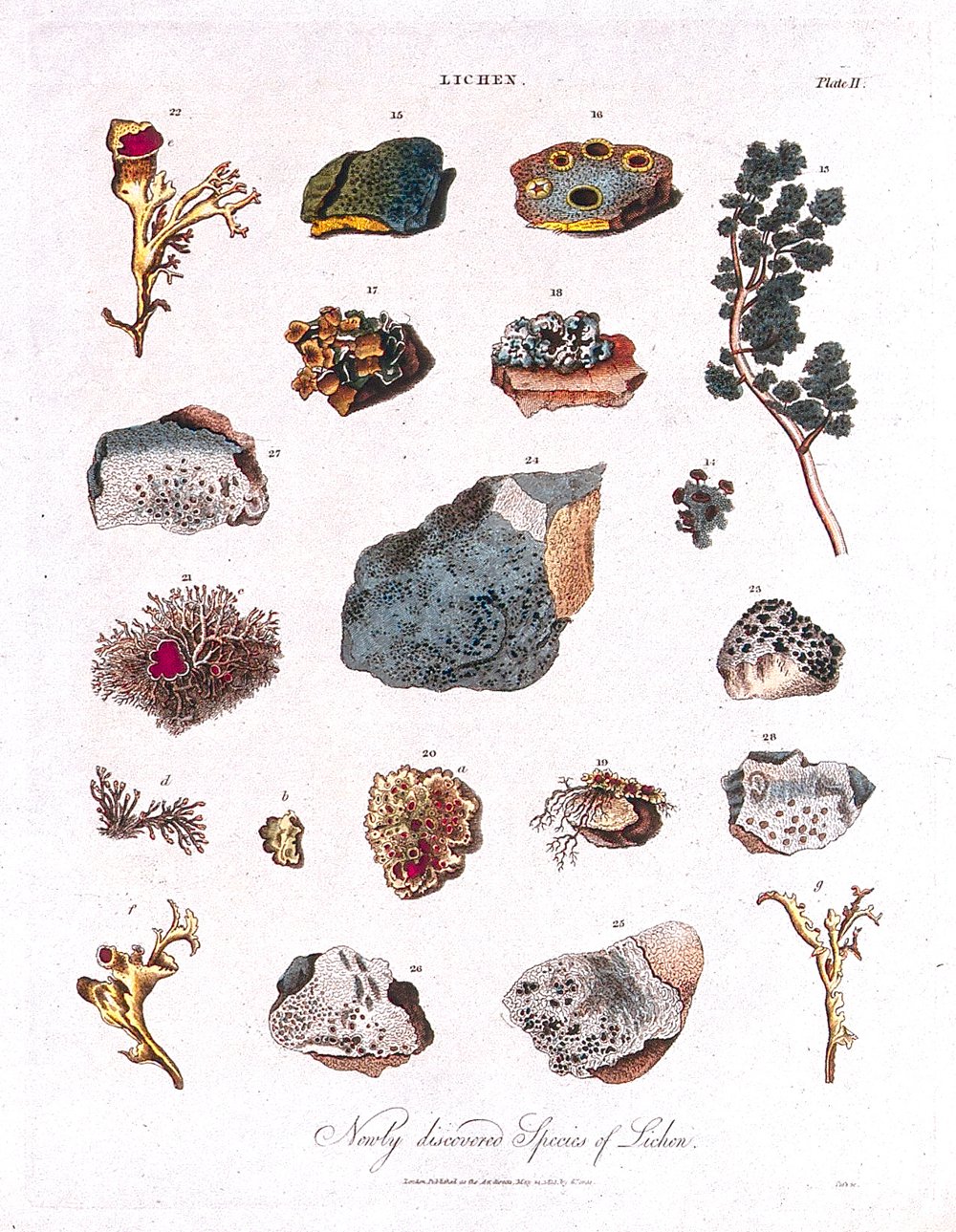
The naturalist's postcard: fifteen species of lichen, engraved by J. Pass in 1813

The naturalist’s postcard

A genuine plate from a Georgian natural history book, with a museum-style note on the back. Made to keep.

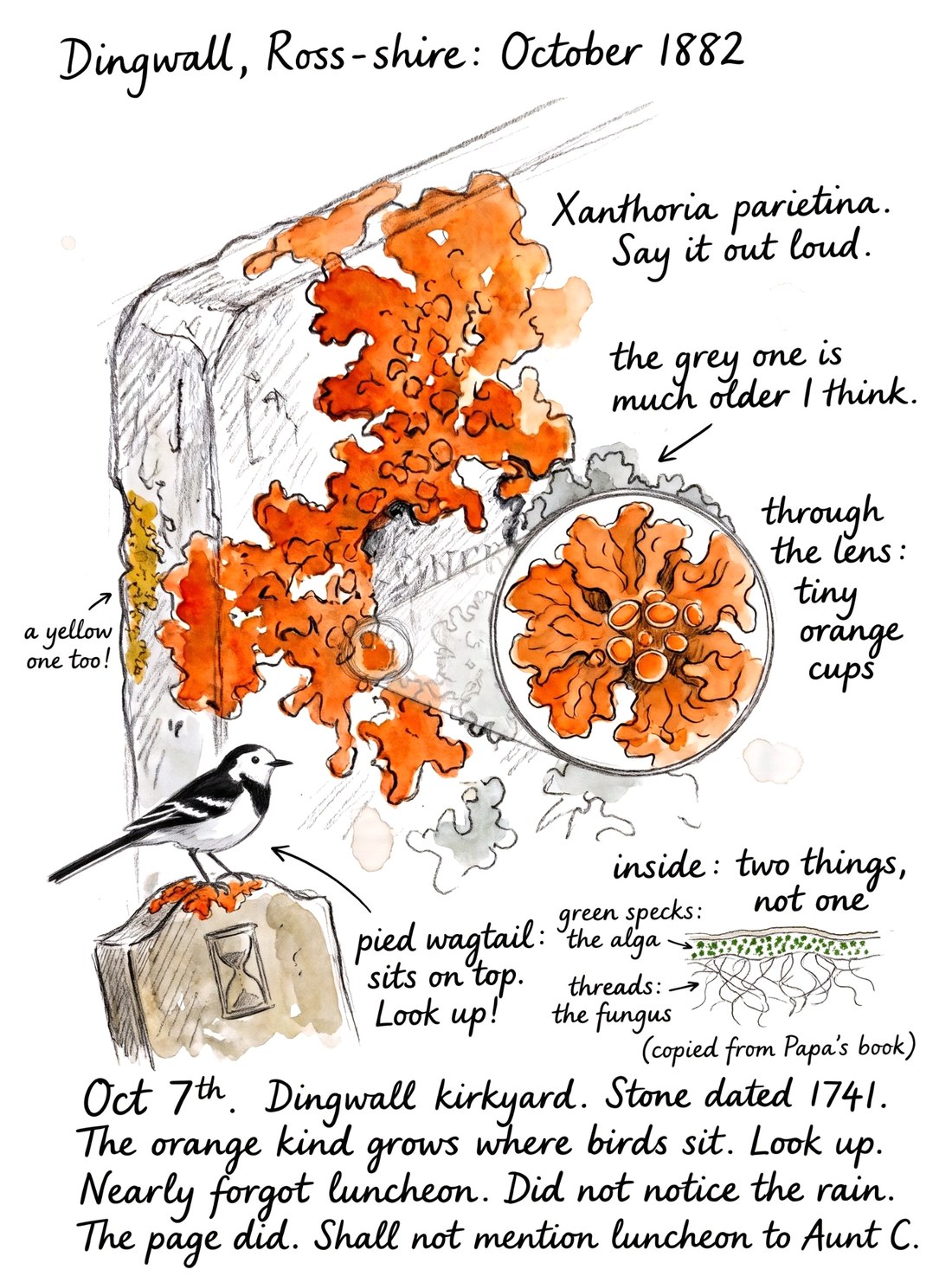
Mira's field sketch of orange lichen on a gravestone

Mira’s field sketch

A page from her notebook on thick cream paper. The back is left blank for your child’s own field notes.

A preview of the first letter

Lichen is not one thing. It is two.

Every envelope holds a letter from Mira and one from her uncle Edmund, written months earlier and half a world away. Here is how the first of Mira’s starts.

7th October, 1882
Dingwall, Ross-shire

Dear Friend,

I want to tell you about something I found growing on a wall. That sounds dull, I know. But it is one of the strangest and best things I have ever seen, so I hope you will trust me for a page or two.

I like drawing things that hold still, and a kirkyard in October holds very still indeed. Cold and quiet, the sun low and gold, the trees nearly bare. Aunt Cressida waited at the gate a while, being polite about it, then went home. That is when I noticed the patches on the stone I was drawing (dated 1741, so it has had time to grow things). Grey ones. Yellow ones. And one smudge of bright orange, like a little sunset had fallen off somewhere and stuck.

I had always thought lichen was a kind of moss. Nothing worth looking at twice. I was wrong, and being wrong turned out to be the best part.

Lichen is not one thing. It is two things, living so closely together that they look like one.

A fungus and an alga. (I had to ask Aunt Cressida what an alga was: a very small, very simple sort of plant, too small to see on its own. I take her word for it.) The fungus is the crusty bit you can see. The alga lives tucked inside it, makes food out of sunshine, and shares it. The fungus holds on to water and keeps the alga safe in return.

The letter carries on, and ends, as every letter does, with something to go outside and find.

Mira's sketch of lichen in Dingwall kirkyard, October 1882

Edmund’s letter comes in the same envelope. His is the one that gave Mira the idea:

The lichen does not wait for conditions to improve. It makes conditions improve. Slowly, over years, it breaks the rock down, accumulates moisture, builds the first thin layer of something that might eventually become soil. The forest does not know it owes everything to the lichen. But it does.

P.S. Captain Holt asked what I was doing on my hands and knees on a lava field for two hours. I told him I was conducting a survey. He seemed satisfied with this.

Edmund Carew, anchored off Banda Api, January 1882

The story

Somewhere in the Banda Sea, a scientist is writing to his niece.

Edmund Carew writes about the creatures he finds: fish that walk, lichen on cooling lava, birds that cross continents. He posts it all home from whichever port the captain finds convenient. The letters take months to arrive. Mira reads them until the folds wear thin, then goes outside to look for herself.

Every letter carries one real piece of natural history, told as story rather than lesson.

My Uncle Edmund knows the name of everything. Not just the English name, but the Latin name, the local name, the name sailors use and the name scientists argue about.

He says that naming a thing properly is the beginning of understanding it, and that most people never get that far because they do not stop long enough to look.

Mira Ashworth, 1882

How it works

Dear Mira is told like a serial. Everyone receives the same letter each month, so the whole story moves forward together, and every letter stands on its own.

  1. It arrives in the first week of the month

    Every subscriber’s dark blue envelope goes out together on the first Monday of each month, with your child’s name on the front. Your first one also carries a short note from Mira, introducing herself.

  2. They go looking

    Each letter ends with something to find: lichen on a wall, a feather, a rock pool, a star.

  3. They write it down

    Field notes go on the back of Mira’s sketch. Over a year, they build their own naturalist’s notebook.

Join Mira in the field

Founding families

Our first 50 families pay £6.95 an envelope, for as long as they stay.

A new letter on the first Monday of each month. Subscribe by the Sunday eight days before and your first envelope goes out on the first Monday of the month. Pay monthly, or for six or twelve months at a time, at the same founding rate. Nothing to pay today: the first payment is taken on the first of the month your first envelope posts in, as the first envelopes are made up, or a month after you join if that comes sooner. Postage included. Cancel any time.

£6.95 an envelope

50 of 50 founding places left

Monthly

One envelope a month

Standard price £9.95Founding price £6.95 Join monthly
6 months

Six envelopes, paid every six months

Standard price £53.70Founding price £41.70 Join for six months
12 months

Twelve envelopes, paid once a year

Standard price £95.40Founding price £83.40 Join for a year

The crossed-out prices are what a subscription costs once the founding places are gone.

Gifts

A present that keeps arriving.

For the curious child you know, the one who always stops to look. The first envelope goes out with the next monthly post, addressed to the child. If you would rather wrap it yourself, email us when you order and we will post the first one to you instead.

While the founding places last, gifts are at the founding price too: £6.95 an envelope, however many months you give. The standard price is shown crossed out.

Giving it for Christmas 2026? Order by Sunday 29 November and the December letter, posted on Monday 7 December, is the first. Order after that and the first letter posts on Monday 4 January; we email you a gift card to print and wrap.

3 months of letters

Three envelopes, paid once

Standard price £29.25Founding price £20.85 Give 3 months
6 months of letters

Six envelopes, paid once

Standard price £53.70Founding price £41.70 Give 6 months
12 months of letters

Twelve envelopes, paid once

Standard price £95.40Founding price £83.40 Give 12 months

Questions

Who is it for?

Children aged 7 to 11, anywhere in the UK. Younger ones love it read aloud; older ones read it alone and go looking.

Is Mira real?

Mira and Edmund are characters in a story set in 1882. The natural history is real, and every postcard is a genuine historical plate.

What is in the first envelope?

The same four things as everyone’s that month: Mira’s letter, Edmund’s letter, the naturalist’s postcard and Mira’s field sketch. A new subscriber’s first envelope also carries a short note from Mira introducing herself and Edmund, so nobody starts the story lost.

When does it arrive?

Everyone’s letter is posted together on the first Monday of each month, second class, so it arrives in the first week. Subscribe by the Sunday eight days before to be in the next post, which goes out on the first Monday of the month. Everything is made and posted by hand, once a month. The waiting is part of it.

What if we join partway through?

You will not be behind. Every monthly letter stands on its own, and your first envelope carries Mira’s note introducing herself and Edmund, so your child simply joins the story at the next post.

Can I give it for Christmas?

Yes. Order by Sunday 29 November and the December letter, posted on Monday 7 December, is the first. If you would rather wrap it yourself, email us when you order and the first envelope comes to you instead of the child. Order after that and the first letter posts on Monday 4 January; we email you a gift card to print and wrap, so there is still something under the tree.

When do I pay?

Not when you join. Your first payment is taken on the first of the month your first envelope posts in (the first of the month for the next post), or a month after you join if that comes sooner, and Stripe’s checkout page shows you the date before you confirm. After that, monthly plans are charged on the same day each month, and six- and twelve-month plans renew at the end of their period. Gifts are paid once, when you order.

Can I cancel?

Yes, any time, from Manage your subscription at the foot of this page or the link in your receipt email. Founding families keep the founding rate for as long as they stay subscribed.

Can my child write back?

They don’t need to, but they’re welcome to, with a grown-up’s help. Letters and field notes for Mira can go to hello@dearmira.co.uk.

Written, printed and posted by hand in Devon.

Dear Mira is made by Chris, a dad of three in Exeter who would always rather be out exploring Dartmoor with them.